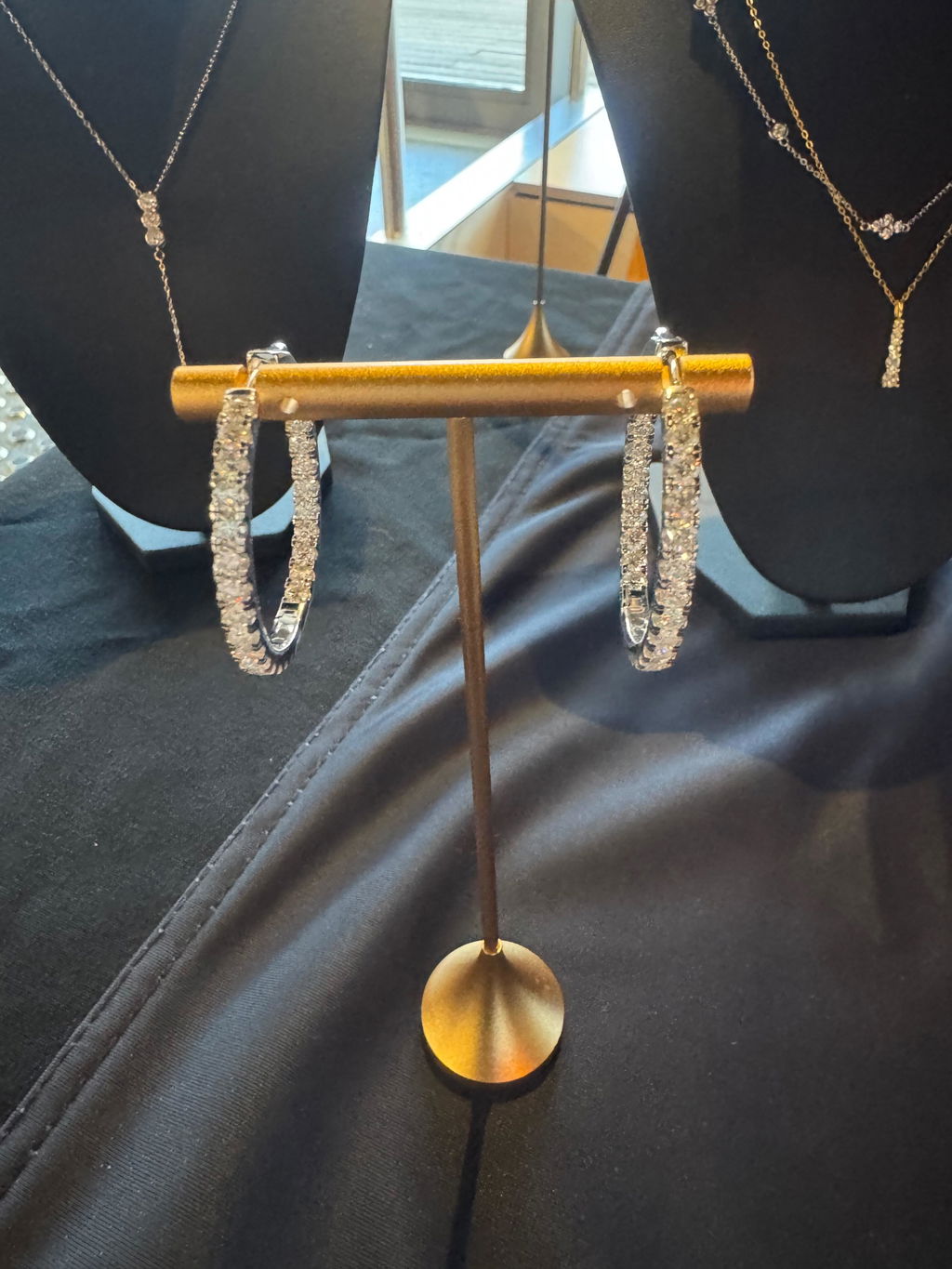
Packing your bags for holidays is usually the source of heated arguments about what jewellery you should take with you. You need jewellery that can add some extra dazzle to an evening at Noosa or when you are walking around Bondi Beach, but you do not want your precious rings to make your hands look green.
We have been hearing from many people about the need for elegant travelling abroad without the risk of losing their valuable jewels. And the way out is to get the right travelling jewellery that can cope with the difficulties of the season but still look like real diamonds and gold.
Quick Answer: What jewellery won't tarnish while travelling?
Solid gold, platinum, stainless steel, and rhodium-coated sterling silver have high resistance to tarnishing while on a trip. For cost-effective elegance, one can wear moissanite jewellery that is made out of 925 sterling silver with a layer of rhodium and offers good protection against oxidation and a dazzling shine.
Why Does Jewellery Tarnish on Holiday?
Jewellery gets tarnished during vacations because jewellery is exposed to a greater number of elements that accelerate the process of oxidation or corrosion. Exposure to humidity, sea salt, pool chlorine, chemical-laden sunscreens, insecticides, and other similar elements makes particular metal alloys turn black, lose colour, and lose their lustre.
Your life at home is predictable; all your jewellery is in a safe environment. However, the moment you get ready for an adventure trip, all the accessories you wear become exposed to all kinds of chemical processes.
According to the Gemological Institute of America (GIA), tarnishing can be said to be a form of chemical reaction between the metals contained in your jewellery and either sulphur or moisture in the air. Since pure metals like 24 carat gold do not tarnish, but they tend to be very soft and hence unsuitable for use, they need to be alloyed with other metals like silver or copper.
As you move about, you get more sweaty. You smear thick coats of sunscreen to survive the intense rays of the Australian sun. You could be diving into a chlorinated hotel pool or swimming in the vastness of the sea. All of these contribute towards accelerating the process of corrosion, which makes it necessary for you to wear authentic tarnish-proof jewellery.

Best Tarnish-Resistant Materials for Travel
The best materials that can withstand wear from tarnishing during travelling are pure gold, platinum, surgical stainless steel, and rhodium-coated sterling silver. Such materials do not react with moisture or lotion and therefore remain shiny throughout the journey. When selecting stones for your jewellery, moissanite is one of the best choices: at 9.25 on the Mohs scale it resists scratches and keeps its sparkle through daily wear.
When assembling a collection of jewellery for travelling, you must focus on the materials used. Below is a detailed guide to choosing the best materials:
Rhodium-Plated Sterling Silver
Sterling silver undergoes natural oxidation over time, but in Prism & Pearl, we utilise rhodium plating extensively. Rhodium is an expensive metal belonging to the platinum family and forms a tough, reflective coating on 925 sterling silver. This creates a barrier that does not allow the underlying silver to oxidise. Travel jewellery made of rhodium is very strong and is suited to travel for any length of time.
Moissanite
Should you be on the lookout for travel jewellery that consists of moissanite, then I have to say that your decision is a rather brilliant one. This is because moissanite is not a natural gemstone; it has been manmade. In terms of the Mohs scale of hardness, it scores 9.25 – this is the second highest after diamond. Moissanite will not cloud, scratch or lose its sparkle even when it hits your luggage or touches sand at a beach.
Stainless Steel and Titanium
Stainless steel and titanium are very strong materials suitable for making waterproof jewellery. These materials do not rust or oxidise easily. The problem with them is that they are not beautiful to look at like gold and silver; therefore, they are ideal for making heavy chains but not for evening jewellery.
Material Comparison for Travellers
| Material | Tarnish Resistance | Travel Friendly | Maintenance | Best For |
|---|---|---|---|---|
| Rhodium-Plated Silver | High | Excellent | Low (Wipe with soft cloth) | Evening wear, engagement ring replicas |
| Solid Gold (14k/18k) | Very High | Poor (High risk of theft/loss) | Low | Storing safely at home |
| Moissanite | Complete | Excellent | Low (Rinse with mild soap) | Everyday sparkle, travel rings |
| Stainless Steel | High | Good | Zero | Casual beach days, chunky bracelets |
| Brass / Copper Alloys | Very Low | Poor | High (Constant polishing) | Avoiding entirely on holiday |
Metals and Gemstones to Leave at Home
Stay away from brass, copper, or cheap metals because they tend to become discoloured easily when they come into contact with water. Pearls, opals, and emeralds are examples of gemstones that can be easily scratched and damaged by heat and the chemicals in suntan lotion and perfume.
While it is tempting to bring your entire collection on a trip, certain pieces are a liability.
-
Pearls and Opals: These stones are quite porous, and as such, when they come into contact with the SPF 50+ sunblock and the insect repellents, their sheen will become forever dulled due to the chemicals seeping into them.
-
Sentimental Heirlooms: The Australian Government’s Smartraveller website advises tourists regarding petty theft in many tourist spots all over the world. Furthermore, normal travel insurance covers have very limited coverage for jewelleries. For example, a lost $10,000 diamond ring may just be covered at $1,000.
- Fast-Fashion Metals: Metals corrode instantly in air that is both salty and humid. Within three days of starting your journey, that shiny golden necklace would definitely lose its colour to become green at the neckline.
How to Pack Your Jewellery for Travelling
In order to protect your jewellery during travel, you need to pack your items individually so that there won’t be any scratches or tangling of items. Choose either a jewellery case or a travel organiser with compartments where each item has its own space. Never put your valuable belongings in the checked luggage, but rather in the hand baggage.
Improper packing of accessories will only bring you a tangle of scratches. Our checklist of packing jewellery when travelling is presented below:
The Packing Checklist
- Avoid putting them into the cargo bay. It is essential that you take your jewellery with you in your hand luggage.
- Store your pieces in a jewellery bag. An expensive bag made of either velvet or leather with individual spaces for different items will prevent any friction between your pieces.
- Straw hack for necklaces. To avoid having your fine chains get entangled, insert one end of the necklace through a piece of paper straw and close the straw shut.
- Thread your earrings through buttons. Should you lack a good jewellery box, you can thread your earrings onto a piece of extra clothing's button for safekeeping.
- Rings wrapped in cling film. Place your rings on a piece of cling film, wrap them tightly together, and press down to create a vacuum.
Airport Security: Do You Need to Remove Your Jewellery?
Generally, most jewellery would not be required to be taken off at airport security. This is because metal detectors installed at larger airports, including the likes of Sydney Airport or Melbourne Airport, are programmed to overlook small amounts of precious metals, which include silver and gold. However, large costume jewellery and watches may trigger the metal detector and need to be taken off.
Passing through security can be a nerve-racking experience, and you wouldn’t want to have any trouble unclasping your jewellery amid crowds waiting behind you.
Mostly, you can keep your travel jewellery, dainty necklaces, and stud earrings where they are because today’s security systems are built to recognise heavy and dense metals, so your tiny jewellery, made from sterling silver and moissanite, will not cause any problems.
In case you wear a heavy travel bracelet or a bulky metal watch, it's better to take them off and put them in your carry-on bag. Putting your jewellery in plastic security trays is one of the reasons why jewellery gets lost there.
Protecting Your Jewellery at the Beach and Pool
If you want to avoid any damage to your jewellery while spending time at the seaside, it’s better not to wear it in water. Salt water will corrode your jewellery faster, while pool chlorine may permanently damage your alloy and porous gemstones. If you find yourself in such a situation, then you need to rinse your jewellery in fresh water and then dry it thoroughly.
Even if your piece of jewellery is not prone to tarnishing, you still need to take care of it when near the water. While chlorine is the enemy of precious metals, it can pockmark the surface of gold alloys and damage rhodium plating. While saltwater is not so corrosive, it can cloud gemstones and oxidise silver.
For swimming jewels, you should have those that are either made from solid gold or surgical stainless steel. However, we would still suggest that you remove all the jewellery from your body before going for a swim, as cold water causes the fingers to contract, which leads to rings getting swallowed by the sea. Carry a little cloth pouch in your bag and put all the jewellery in it after removing it.
Our Recommended Travel Jewellery Pieces
As regards packing for your holiday, pack those items that offer maximum flexibility, allowing you to transition from day activities to night dining without having to pack twenty accessories.
1. The Perfect Travel Ring
Taking off your engagement ring before you leave the house is probably one of the smartest decisions you could ever make. Rather, opt for a travel ring which Australia loves: the magnificent moissanite ring with a rhodium-plated sterling silver setting. It flashes just like a diamond and is also less likely to be lost or stolen.
2. A Versatile Travel Bracelet
The ideal travelling accessory for women would be a moissanite tennis bracelet that would enhance the beauty of an unadorned linen dress without getting damaged by the hustle and bustle of sightseeing.
3. A Statement Necklace
Carry one good pendant necklace. Solitaire pendant necklaces stand out due to their ability to layer well with various necklines.
In case you need more ideas about how to create your own affordable yet diverse collection of jewellery, we highly recommend you read our guide on what the best affordable luxury jewellery pieces for women are.
Key Takeaway
The ability to find jewellery that does not tarnish during travel lies in choosing the appropriate material and caring for your jewellery in the simplest way. Choose rhodium-plated sterling silver and moissanite, and you can travel with the look of fine jewellery at an affordable price.
Make sure that your pieces remain spotless by storing them safely in your carry-on bag, giving them a little wipe-down after spending an entire day under the hot sun. By doing so, your travel jewellery will retain its beauty as you fly back home as much as it did when you first packed it.
In making plans for your next getaway, we welcome you to browse through our Travel Jewellery Collection here at Prism & Pearl. Our jewellery collection is made for the modern woman who wants jewellery that is both luxurious and durable.
Frequently Asked Questions
Can I wear jewellery through airport security?
Yes, fine jewellery is generally okay to wear when going through airport security checks. Places like Brisbane Airport and Sydney Airport make use of metal detectors, which are built to not detect small amounts of precious metal. However, you may want to take off any bulky jewellery or watches.
Does sterling silver tarnish while travelling?
Sterling silver is known to develop tarnish due to exposure to high humidity, perspiration, and salty air. But if the sterling silver is rhodium-plated like the jewellery that we sell in Prism & Pearl, then it is quite resistant to tarnishing and suitable for travelling.
Is moissanite good for travel?
Moissanite is a great stone to travel with. With its Mohs hardness rating of 9.25, it is not susceptible to scratching, chipping, or clouding. Moissanite has the same brilliance as diamonds and is an excellent choice as a focal point for travel jewellery without the risks involved in transporting expensive pieces.
Should I pack jewellery in checked luggage?
Definitely not. Jewellery must never be kept in your checked baggage. Baggage may be misplaced, delayed, or even pilfered. Your jewellery should be kept in a separate pouch or box, which should be stored in your own carry-on baggage.
Can I wear jewellery at the beach?
Even though it is possible to wear tarnish-proof jewellery to the beach, it is better not to do that. The salty sea water may spoil the shine of both metal and precious stones. Moreover, the temperature of the water may make the fingers thinner, and the jewellery may slip away from them.
What is the best tarnish-resistant jewellery for holidays?
The best options are solid gold, platinum, stainless steel, and 925 sterling silver, rhodium-plated. This is because they have the least reaction to sweat, sun cream, and humid weather. They are also the most compatible with durable gemstones like moissanite.